The Coca-cola contour bottle was originally patented on Nov. 16, 1915, but it wasn't available to customers at retail until a year later. Nowadays, it's harder to find a true glass contour bottle on retails shelves as suppliers opt to have the less fragile aluminum and plastic (PET) containers. However, nothing tastes better than an ice-cold, fizzy Coca-cola straight from the original glass bottle!
Showing posts with label facts. Show all posts
Monday, July 5, 2010
Coca-cola Contour Bottle
The Coca-cola contour bottle was originally patented on Nov. 16, 1915, but it wasn't available to customers at retail until a year later. Nowadays, it's harder to find a true glass contour bottle on retails shelves as suppliers opt to have the less fragile aluminum and plastic (PET) containers. However, nothing tastes better than an ice-cold, fizzy Coca-cola straight from the original glass bottle!
Saturday, July 3, 2010
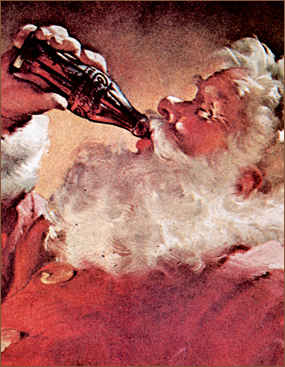
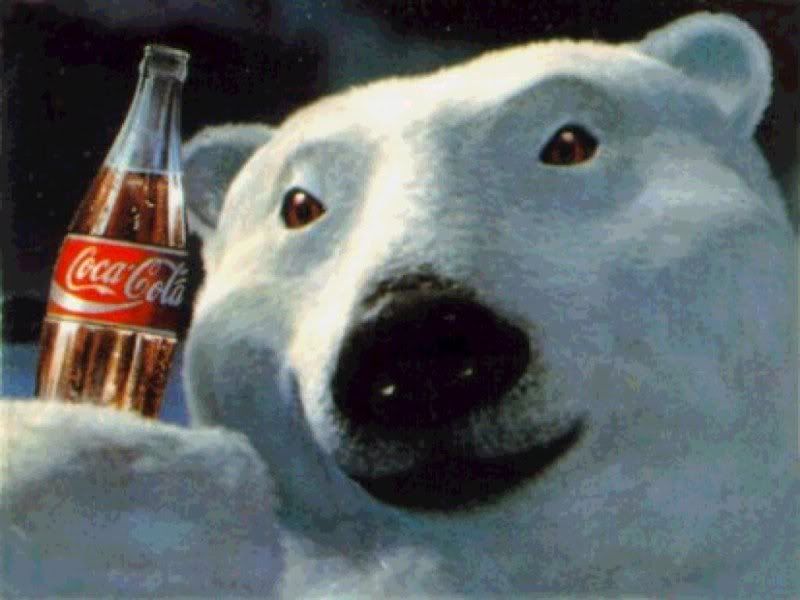
Coca-cola Santa & Polar Bear
The Coca-cola Santa was created to get more people to drink soda in the colder months.

The polar bear was part of the 1993 'Always Coca-cola' campaign. It was introduced to launch a new advertising concept, animated story board commercials on TV.

Not only did the ideas work, but it etched two of the most popular icons in advertising history.
The polar bear was part of the 1993 'Always Coca-cola' campaign. It was introduced to launch a new advertising concept, animated story board commercials on TV.
Not only did the ideas work, but it etched two of the most popular icons in advertising history.
Things Go Better with Coke
Tastes Like Home
Monday, June 21, 2010
Science of Coke and Mentos
As a child I was amazed when a classmate dropped Mentos in a bottle of Coke and he got this huge fountain spray with all the foam coming out.
Only when I got older did I discover that there is a science to all of this.
Experiments in Mythbusters suggested the chemicals responsible for the reaction are gum arabic and gelatine in the sweets, and caffeine, potassium benzoate and aspartame in the Coke. But there have been no rigorous scientific studies of the reaction until now.

In layman's term, the prime factors that drive the fizzy plumes from Coke bottles: the roughness of the sweet and how fast it plummets to the bottle's base.
Only when I got older did I discover that there is a science to all of this.
Experiments in Mythbusters suggested the chemicals responsible for the reaction are gum arabic and gelatine in the sweets, and caffeine, potassium benzoate and aspartame in the Coke. But there have been no rigorous scientific studies of the reaction until now.

In layman's term, the prime factors that drive the fizzy plumes from Coke bottles: the roughness of the sweet and how fast it plummets to the bottle's base.
Not-Cool Article
Lifted from this site:
http://cache.gawker.com/assets/images/gawker/2010/01/haitigirl.jpg
A teenage Haitian girl who was in the shower when her house collapsed was rescued alive yesterday, 15 days after the earthquake. "[She] mumbled something about having a little Coca-Cola with her in the rubble." Sign her up, Coke. [AP]
DEFINITELY NOT COOL!!
http://cache.gawker.com/assets/images/gawker/2010/01/haitigirl.jpgA teenage Haitian girl who was in the shower when her house collapsed was rescued alive yesterday, 15 days after the earthquake. "[She] mumbled something about having a little Coca-Cola with her in the rubble." Sign her up, Coke. [AP]
DEFINITELY NOT COOL!!
Subscribe to:
Comments (Atom)